Sunday Sermons

Effective And Effectual Prayer (2)

Matthew 6: 9, Psalm 15:1-5

“Keep back Thy servant also from presumptuous sins, let them not have dominion over me: then shall are be upright, and I shall be innocent from the great transgression. Let the words of my mouth, and the meditation of my heart, be accepted in thy sight, O LORD, my strength, and my redeemer.” Psalm 19:13-14

The second principle of effective prayer as laid down by Christ in Matthew 6:9 is worship. When Jesus said”Hallowed be Thy name,” He was teaching us the pattern for honouring, worshipping and adoring our God. Worshipping God is not primary about singing but about how you esteem Him with your life in and out of church.

God warned His people in the Old Testament not to take His name in vain. The principle of prayer requires you to honour the name of the Lord, hallow and sanctify His name not only at the time of prayer, but more importantly it must be part and parcel of your life. You can’t use the name of God in vain throughout the week and come to church sanctimoniously on Sunday. That way, you are simply playing religion with the name of the Lord, but deceiving yourself to think you are hallowing His name. This is what many Christians do and that is why they don’t get answers to prayers.

Many people pray just to soothe their conscience, but prayer is more than smoothing your conscience. Effective prayer is a two way communication with the living God, by human being living in a convenant relationship with God. This affects and changes things in the situations and circumstances of such people. Don’t form the habit of praying to soothe your conscience or just praying as a religious duty. Let your heart permanently express true worship in and out of prayer a life that eschews evil, lavishes on the Lord and esteem God above all.

LET US PRAY:

Lord, I worship you from the depth of my heart. I refuse to mount empty words but I pray for grace to honour you in all my ways in Jesus name. Amen.

To be continued on next Sunday.

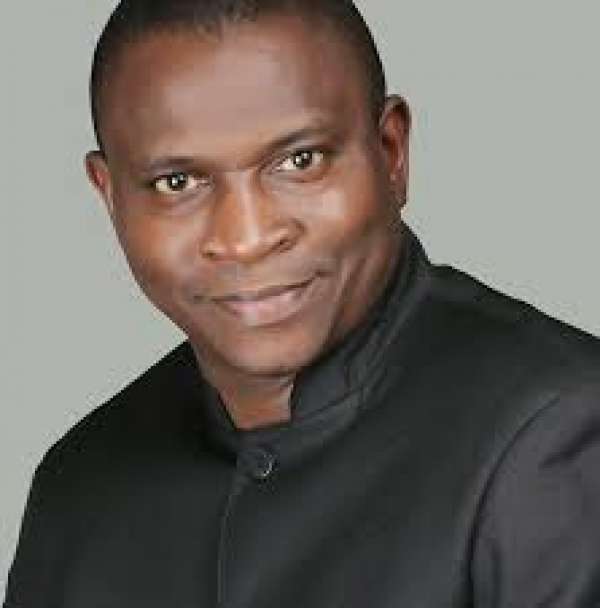
Delivered by Vershima Orkuma Hemen,

The Family Altar Prayer Ministry
Sunday Sermons

Effective And Effectual Prayer (2)

Matthew 6: 9, Psalm 15:1-5

“Keep back Thy servant also from presumptuous sins, let them not have dominion over me: then shall are be upright, and I shall be innocent from the great transgression. Let the words of my mouth, and the meditation of my heart, be accepted in thy sight, O LORD, my strength, and my redeemer.” Psalm 19:13-14

The second principle of effective prayer as laid down by Christ in Matthew 6:9 is worship. When Jesus said”Hallowed be Thy name,” He was teaching us the pattern for honouring, worshipping and adoring our God. Worshipping God is not primary about singing but about how you esteem Him with your life in and out of church.

God warned His people in the Old Testament not to take His name in vain. The principle of prayer requires you to honour the name of the Lord, hallow and sanctify His name not only at the time of prayer, but more importantly it must be part and parcel of your life. You can’t use the name of God in vain throughout the week and come to church sanctimoniously on Sunday. That way, you are simply playing religion with the name of the Lord, but deceiving yourself to think you are hallowing His name. This is what many Christians do and that is why they don’t get answers to prayers.

Many people pray just to soothe their conscience, but prayer is more than smoothing your conscience. Effective prayer is a two way communication with the living God, by human being living in a convenant relationship with God. This affects and changes things in the situations and circumstances of such people. Don’t form the habit of praying to soothe your conscience or just praying as a religious duty. Let your heart permanently express true worship in and out of prayer a life that eschews evil, lavishes on the Lord and esteem God above all.

LET US PRAY:

Lord, I worship you from the depth of my heart. I refuse to mount empty words but I pray for grace to honour you in all my ways in Jesus name. Amen.

To be continued on next Sunday.

Delivered by Vershima Orkuma Hemen,

The Family Altar Prayer Ministry
Tiv Resistance to the Sokoto Caliphate

Tiv Resistance to the Sokoto Caliphate

By Max Silloun.

“The third way for an ethnic group to earn the tag of ‘martial race’ was to demonstrate a history of resistance to the Sokoto Caliphate…

The Tivs, who lived in the lower part of Northern Nigeria, had fought off frequent slave raids from the Caliphate, maintained their independence, and refused to be converted to Islam. Such attempted invasions made them resistant to strangers and they became feared for attacking intruders with their mysterious and deadly poisoned arrows. British authorities referred to them with a derogatory Hausa word, ‘Munshi’, and regarded Tivland as dangerous bandit country. Tivs acquired a reputation among the British for being ‘truculent’, ‘a most intractable people’, who ‘have proved themselves aggressive and inimical to a degree towards any effort to establish law and order’. The Tivs fulfilled these stereotypes. One month after Britain declared a protectorate over Northern Nigeria in 1900, they attacked an armed British patrol that was installing telegraph lines on their land. In the past they had also attacked the Royal Niger Company’s trading stations in Tivland and murdered two of its agents, causing the company to close all but one of its trading stations in Tivland, at Abinsi. In January 1906 they sacked and burned the remaining factory at Abinsi. Although these attacks brought British military reprisals against the Tivs, it also made them, in British eyes, a potential warrior race and targets for military recruitment. In his 1906 annual report, Lugard reported to the Colonial Office: ‘The Munshis are stated to be an extremely fine race, fearless and independent and very industrious.’

In 1923, only 11 out of 3,000 soldiers in the army were Tivs, but by World War II, the army had 6,000 Tiv fighters. Thereafter the Tiv became synonymous with the army. They remain one of the most heavily represented ethnic groups in the army’s infantry units. In 1950 the commander of the Northern Nigeria Regiment issued recruiting instructions: ‘We only want men of northern origin, and Tivs from Benue.’ British colonial authorities also recruited large numbers of the Tiv’s neighbouring ethnic groups, such as the Idoma, Igala and Jukun, and other groups, such as the Bachama, Tarok, Darkakari, Nupe and Kataf, who either lived on the periphery of Hausaland and resisted conquest by the Sokoto Caliphate, or spoke Hausa in addition to their indigenous language… Sixty per cent of post-independence Nigerian chiefs of army staff came from these parts of the country.”

Max Siollun: What Britain Did To Nigeria. Page 112-113

By Max Silloun. “The third way for an ethnic group to earn the tag of ‘martial race’ was to demonstrate a history of resistance to the Sokoto Caliphate…The Tivs, who lived in the lower part of Northern Nigeria, had fought off frequent slave raids from the Caliphate, maintained their independence, and refused to be converted to Islam. Such attempted invasions made them resistant to strangers and they became feared for attacking intruders with their mysterious and deadly poisoned arrows. British authorities referred to them with a derogatory Hausa word, ‘Munshi’, and regarded Tivland as dangerous bandit country. Tivs acquired a reputation among the British for being ‘truculent’, ‘a most intractable people’, who ‘have proved themselves aggressive and inimical to a degree towards any effort to establish law and order’. The Tivs fulfilled these stereotypes. One month after Britain declared a protectorate over Northern Nigeria in 1900, they attacked an armed British patrol that was installing telegraph lines on their land. In the past they had also attacked the Royal Niger Company’s trading stations in Tivland and murdered two of its agents, causing the company to close all but one of its trading stations in Tivland, at Abinsi. In January 1906 they sacked and burned the remaining factory at Abinsi. Although these attacks brought British military reprisals against the Tivs, it also made them, in British eyes, a potential warrior race and targets for military recruitment. In his 1906 annual report, Lugard reported to the Colonial Office: ‘The Munshis are stated to be an extremely fine race, fearless and independent and very industrious.’In 1923, only 11 out of 3,000 soldiers in the army were Tivs, but by World War II, the army had 6,000 Tiv fighters. Thereafter the Tiv became synonymous with the army. They remain one of the most heavily represented ethnic groups in the army’s infantry units. In 1950 the commander of the Northern Nigeria Regiment issued recruiting instructions: ‘We only want men of northern origin, and Tivs from Benue.’ British colonial authorities also recruited large numbers of the Tiv’s neighbouring ethnic groups, such as the Idoma, Igala and Jukun, and other groups, such as the Bachama, Tarok, Darkakari, Nupe and Kataf, who either lived on the periphery of Hausaland and resisted conquest by the Sokoto Caliphate, or spoke Hausa in addition to their indigenous language… Sixty per cent of post-independence Nigerian chiefs of army staff came from these parts of the country.”Max Siollun: What Britain Did To Nigeria. Page 112-113

BUHARI KEEPS CALM WHEN BENUE STATE IS ATTACKED BUT EVOKE CIVIL WAR MEMORIES WHEN SOUTH-EAST IS INVOLVED.

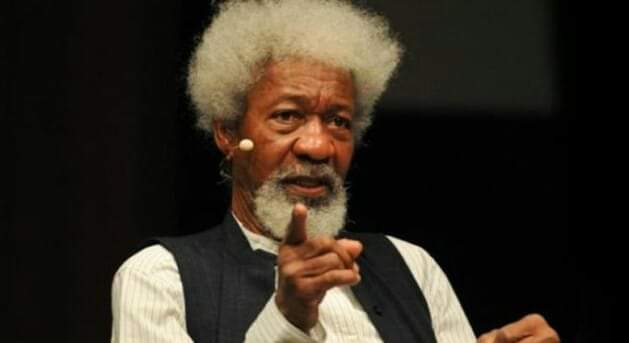
-Prof. Wole Soyinka

Nobel Laureate, Prof. Wole Soyinka, says the President, Major General Muhammadu Buhari (retd.), keeps calm whenever there are attacks in Benue State but is quick to evoke memories of the civil war whenever the South-East is involved.

Soyinka said this in a statement on Friday titled, ‘Off to Shock and Awe’ while reacting to Buhari’s recent statement wherein he recalled how he fought in the Biafran war of 1967-1970 and threatened to deal with “persons misbehaving” in the South-East in a language they understand.

The comment was widely condemned while social media giant, Twitter, deleted the post.

Reacting to Buhari’s statement, however, Soyinka said it was funny that Buhari never sounded tough over the killing of innocent persons in Benue but was quick to evoke memories of the civil war.

He wrote, “When, however, a head of state threatens to ‘shock’ civilian dissidents, to ‘deal with them in the language they understand’, and in a context that conveniently brackets opposition to governance with any blood thirsting enemies of state, we have to call attention to the precedent language of such a national leader under even more provocative, nation disintegrative circumstances.

“What a pity, and what a tragic setting, to discover that this language was accessible all the time to President Buhari, where and when it truly mattered, when it would have been not only appropriate, but deserved and mandatory!

“When Benue was first massively brought under siege, with the massacre of innocent citizens, the destruction of farms, mass displacement followed by alien occupation, Buhari’s language – both as utterance and as what is known as ‘body language’ – was of a totally different temper. It was diffident, conciliatory, even apologetic.”

The Nobel laureate said after much internal pressure, Buhari eventually visited Benue but rather than threaten to “shock the killers” the President asked them to “learn to live peacefully with your neighbours”.

He said Buhari only later asked security agents to shoot criminals on sight after much pressure, a move which he said was belated.

Soyinka argued that the world had moved on from the civil war and wondered why Buhari still spoke of it with nostalgia.

“The evocation of the civil war, where millions of civilians perished, is an unworthy emotive ploy that has run its course. In any case – and this has been voiced all too often, and loudly – the nation is already at war, and of a far more potentially devastating dimension than it has ever known.

“Every single occupant of this nation space called Nigeria has been declared potential casualty, children being pushed to the very battlefront, without a semblance of protective cover. We have betrayed the future. We need no breast-beating about past wars. The world has moved on, so have nations,” he wrote.

GOV ORTOM PAYS TRIBUTE TO LATE POLICE AIG AGHANYA

Benue State Governor, Samuel Ortom says the late retired Assistant Inspector General (AIG) of Police, Ibezimako Aghanya was a true professional who contributed immensely to peace and security when he served as Commissioner of Police in the state.

The Governor states that the demise of Mr Aghanya is an unfortunate loss not only to his family but also to those who came in contact with him and the society at large.

He recalls the late AIG’s efforts in the fight against crime in Benue when he headed the State Police Command as Commissioner and notes that the state is still leveraging on the successes recorded during that time.

Governor Ortom consoles the children and other members of the bereaved family for the painful loss barely three months after the gruesome murder of their mother Mrs Eunice Aghanya.

Terver Akase
Chief Press Secretary
June 7, 2021.

Gen. Muhammad Bihari On A Mission To Complete The Work Of Our Grandfather: Aliyu Gwazo.

BY ALIYU GWARZO

“The problem with you Southerners is that you can never understand the north. We are a mystery to you and you cannot comprehend us despite all your boasting that you are better than us.

You claim to be educated but in fact you are uneducated and uncivilised. What do you know about education and what has it done for you?

We Fulani toss a small bone to you from our table and you betray and fight each other like dogs for it. You crawl before us and beg us for crumbs.

That is your lot in life. You are nothing more than beggars. Cowardly and contended slaves!

Just like your fathers served us, so you shall serve us. Just as you serve us, so your children shall serve us. And just as your children shall serve us, so their children shall serve us.

We are born to rule. Leadership is our blood. No-one in this country can stop or change it. No-one can touch us. Allah has given us Nigeria. It is gift to our forefathers from him.

Our great grandfather Shaik Osman Dan Fodio and the Mujahadeen fought for it. Our grandfather the Saurdana, Sir Ahmadu Bello expanded our borders and frontiers.

Our father President Muhammadu Buhari has come to complete the job and he is doing very well.

You see the most effective chains are the invisible ones. We already have you in those chains but you just don’t know it. We took our power back in 2015. We will not release it to southerners or unbelievers again. Not in the next 100 years!

It is true that we came from Futa Toro and Futa Jalon many years ago and conquered the north. Now every inch of it belongs to us.

Every Fulani, whether from Mali, Senegal, Guinea, Niger, Chad, Cameroon or anywhere else is our brother and has a right to be here with us. We are Fulani before Nigerian and our allegiance is to our Fulani brothers all over West Africa more than you.

Now we will conquer south and we do it in the name of “one Nigeria”. In that “one Nigeria” we shall remain the masters and you shall remain the slaves!

None of you are going anywhere. Nigeria will never break. We will not allow it”-

ALIYU GWARZO.

Why I Resigned From Army: Captain Casmir Nwafa

lawyer and retired Captain in the Nigerian Army, Captain Casmir Nwafor, has said that the major reason he left the army was because of the actions of President Muhammadu Buhari.

Nwafor in a statement said that he was in the army in 2015 when Buhari won the presidential election, saying that the president said certain things that didn’t go down well with him.

His words: “If you say, as Commander-in-Chief, that you are not recognizing my people, why am I in the army fighting for the country? I had to stay back because in short service you must stay 10 years. Then, I had three years. Immediately the three years ended, I left. By the president’s body language, by his appointments, he has shown the other parts of the country that they don’t belong. Then, they are killing people here and there, in Benue, Plateau, you don’t care. You are talking about Ruga.

“The president’s body language and actions are fuelling the tension in Nigeria. Under this government, Nigeria has not been so divided, just like in 1967 when we had the civil war. This is where we are heading. Nigeria is so divided because of the activities of one man, the president. The other day they had security meeting. Almost all the Security Chiefs there are Fulani, Hausa or Muslim. There was nobody from the Southeast. The Vice President who is from the Southwest has no say. In fact, most times, they don’t even call him for meetings. Anything you are discussing and you don’t have the major tribes together, then there is going to be a problem. Before, it was only Southeast. Now, everybody is becoming alienated and disenfranchised.”

Nwafor, who, at some point worked in the office of the National Security Adviser and took part in the probing of the alleged missing money, meant for the purchase of weapons during Goodluck Jonathan’s administration, revealed that Jonathan was not in control of what the military was doing then.

“He would just release money, but nobody was following up. Part of the money was used to buy weapons because I know that Goodluck bought arms. But part of the money was used for politics. People were given money for prayers. People were given money for some funny, funny things that were not related to security issues. Part of that money was used for 2015 elections. All the people who were arrested, including military people, were all given pocket money. Nigerian money was used for welfare. It was not used for arms purchase. But they bought some equipment though. Maybe, what they needed from that $2.1 billion was $1 billion. They now made it $2.1 billion. That excess one was what they were now sharing,” he added.

�����: *AYATUTU REPORTERS*

*_Brief_*

� _AYATUTU MEDIA is a media structure to promote the image of the TIV Nation and foster unity among the TIV people and Benue State at large.

*_Our basic vision_*

�_Our vision is to create a genuine promotion world full of prosperity, meaning, and connection for all._
�_Delivering measurable results to the TIV people, and the larger audience._

*Our basic mission statement*

�Provide the best media results possible and deliver the WOW factor through our services.
�Our mission is to be the experts in media and social Ads alignment and the masters of the message.
�Our team works to eliminate the apathy that will suck the life out of any audience by working to inspire the spirit, penetrate the heart, and ignite t

*The Publisher*
   _Ayatutu_Reporters_